Mechanical Piping Insulation
Commercial Pipe Insulation Wrap: How Contractors Insulate Mechanical Piping in Tight Spaces
Commercial mechanical piping often leaves no room for bulky insulation systems. Learn how reflective pipe insulation wrap helps contractors control condensation, maintain R-value, and meet ASTM E84 Class A requirements in tight mechanical spaces across Canada and the US.
Commercial Pipe Insulation Wrap: How Contractors Insulate Mechanical Piping in Tight Spaces
Commercial pipe insulation looks straightforward on a specification sheet. In the field, it rarely is.
Mechanical piping systems in commercial buildings are often installed in crowded equipment rooms, narrow ceiling chases, retrofit facilities, and grouped assemblies where there is limited clearance between pipes, walls, valves, and adjacent systems. Under these conditions, many traditional insulation materials become difficult to install correctly, or fail to perform at their rated thermal value once compressed into place.
For commercial HVAC and mechanical contractors, the challenge is not simply covering the pipe. The challenge is achieving thermal performance, condensation control, and fire-code compliance in the actual installed space available.
This is where reflective bubble foil pipe insulation wrap offers a practical advantage.
Why Commercial Mechanical Piping Requires Proper Insulation
Commercial piping systems are responsible for carrying chilled water, hot water, refrigeration lines, condensate, process fluids, and other temperature-sensitive mechanical services throughout a building.
Without proper insulation, these systems can create several costly performance issues:
unwanted heat gain or heat loss
condensation and dripping on cold lines
increased HVAC energy demand
corrosion risk from long-term moisture exposure
unsafe surface temperatures
failed inspection if code requirements are not met
For commercial buildings, pipe insulation is not only an efficiency measure. It is part of maintaining long-term mechanical performance and protecting surrounding building assemblies.
Why Traditional Pipe Insulation Becomes Difficult in Tight Mechanical Rooms
Many commercial projects do not offer ideal installation conditions.
Contractors frequently work around:
tightly stacked pipe banks
grouped valves and fittings
wall penetrations with limited backside access
low ceiling mechanical chases
retrofit systems installed close to existing structure
Fiberglass pipe insulation and rigid foam systems can satisfy thermal requirements in open areas, but they become problematic when the available clearance is minimal. Bulky insulation can compress between adjacent surfaces, reducing actual thermal performance.
Standard reflective insulation products often introduce another issue: many require 3/4" to 1" of surrounding airspace to achieve their tested R-value.
In commercial mechanical piping assemblies, that airspace often does not exist.
The result is a common field problem — the insulation may be installed, but it is no longer performing as the specification intended.
How Reflective Bubble Foil Pipe Insulation Solves the Airspace Problem
Insulapack's reflective bubble foil insulation is designed differently from conventional wraps.
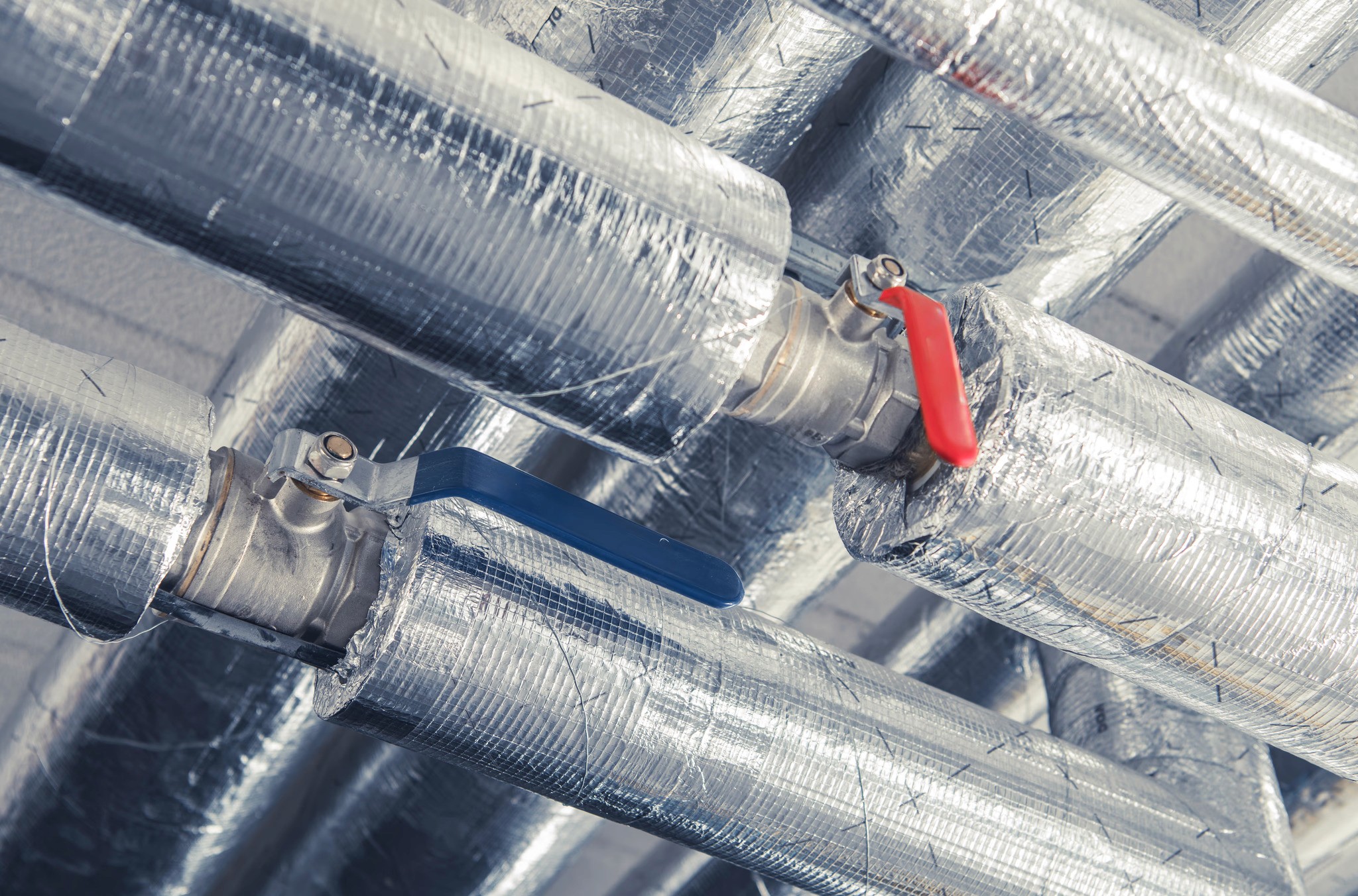
Instead of relying on external installation airspace, the material uses sealed inert gas bubble chambers between reflective aluminum layers to create thermal resistance internally. This allows the insulation to perform in direct contact with the pipe surface without requiring spacers or clearance around the assembly.
That means contractors can insulate:
straight pipe runs
elbows
tees
grouped piping systems
valves and supports
while still maintaining:
R-10.6 per inch thermal performance
97% radiant heat reflection
ASTM E84 Class A fire rating
no external airspace requirement
For tight mechanical piping systems, this direct-contact installation is the key difference between a product that fits the job and one that creates installation compromises.
Advantages of Reflective Pipe Insulation Wrap on Commercial Projects
1. Better fit in confined spaces
The thin-profile flexible wrap conforms closely to pipe surfaces without the bulky thickness required by traditional systems.
2. Faster installation around fittings
Mechanical contractors can cut, wrap, and seal around valves, elbows, and irregular assemblies more efficiently than piecing together rigid insulation sections.
3. Condensation control
The sealed reflective layers help reduce temperature differential exposure and assist in limiting condensation on chilled piping systems.
4. Cleaner installation environment
Unlike fiberglass materials, reflective bubble foil does not release fibers or dust during installation.
5. Commercial fire-code readiness
ASTM E84 Class A certification helps contractors satisfy fire-performance requirements commonly referenced in commercial mechanical specifications.
Common Commercial Applications for Pipe Insulation Wrap
Reflective bubble foil pipe insulation is especially effective in projects where both thermal performance and installation clearance matter.
Typical applications include:
commercial HVAC piping systems
chilled water lines
heating hot water supply and return
industrial process piping
rooftop mechanical retrofits
food processing facilities
institutional mechanical rooms
ceiling and wall mechanical chases
These are the installations where traditional bulky insulation systems can slow labour, reduce fit quality, or create long-term condensation issues.
What Contractors Should Confirm Before Specifying Pipe Insulation
Before selecting insulation for a commercial piping scope, contractors should confirm several practical installation questions:
Does the product require airspace to achieve rated R-value?
If the product depends on surrounding clearance, verify that clearance actually exists in the mechanical assembly.
Will the insulation compress between grouped piping?
Compression can significantly reduce installed thermal performance.
Is ASTM E84 Class A documentation available?
Commercial occupancies often require fire-tested materials.
How labour-intensive is installation around valves and fittings?
Complex assemblies can increase installation hours substantially.
Is the product moisture resistant?
Cold mechanical systems require insulation that helps reduce sweating and long-term condensation damage.
These field considerations determine whether the selected insulation performs after installation — not just on paper.
The Better Pipe Insulation Solution for Tight Mechanical Piping Systems
Commercial mechanical piping is rarely installed in wide-open accessible spaces. More often, contractors are insulating systems in dense mechanical rooms where every inch of clearance matters.
In those environments, insulation that requires bulk thickness or external airspace quickly becomes difficult to install correctly.
Reflective bubble foil pipe insulation wrap offers a more practical solution:
high R-value per inch
no spacer required
direct-contact installation
ASTM E84 Class A fire performance
flexible application around irregular assemblies
For commercial HVAC and mechanical contractors across Canada and the United States, it provides a reliable way to insulate piping systems without sacrificing thermal performance in confined spaces.
Insulapack has manufactured reflective mechanical insulation systems for commercial and industrial applications since 1975.
Need insulation for a tight mechanical piping project?
Request a quote and our team will respond within one business day.
Technical Specifications