HVAC Insulation Material Comparison
Reflective Bubble Foil vs Fiberglass: Best Choice for Commercial HVAC Contractors
Choosing between reflective bubble foil and fiberglass for commercial HVAC? The contractor's guide to R-value, fire ratings, airspace, and code compliance.
Reflective Bubble Foil vs Fiberglass Insulation: The Commercial Contractor's Guide
Every commercial HVAC contractor has faced the same conversation: the spec calls for insulation, the mechanical room is tight, and the question is which material actually works in the space you have. Fiberglass has been the default for decades. Reflective bubble foil keeps appearing on spec sheets and distributor catalogs. Knowing when to use each, and when one simply cannot do the job, is the difference between a clean inspection and a costly rework.
This guide cuts through the marketing and gives you the technical comparison commercial contractors need when specifying insulation for HVAC ductwork, piping systems, and mechanical assemblies across Canada and the United States.
How Each Material Works — and Why It Matters on Site
Fiberglass insulation works by trapping air within its fiber structure, slowing conductive heat transfer. Its R-value increases with thickness. A 2-inch fiberglass batt delivers roughly R-8. A 4-inch batt delivers R-16. The thicker the material, the more thermal resistance it provides — straightforward in open cavities, problematic in confined spaces.
Reflective bubble foil insulation works differently. Its multi-layer construction — aluminum foil faces bonded around sealed bubble pockets — creates thermal resistance through two mechanisms: reflecting radiant heat (up to 95%) and trapping air within the sealed bubbles themselves. The result is a material that achieves R-10.6 per inch without relying on bulk thickness to perform.
This distinction is not academic. It determines which product can physically be installed correctly in the spaces commercial contractors actually work in.
The Airspace Problem — Where Fiberglass Falls Short on Commercial Jobs
Traditional reflective insulation products require 3/4" to 1" of clear airspace on at least one face to achieve their rated R-value. In a properly staged residential attic or a wide open wall cavity, that requirement is easy to meet. In a commercial mechanical room — where ductwork runs tight against structural elements, piping sits flush against walls, and clearances of less than an inch are standard — that airspace requirement makes conventional reflective insulation effectively non-compliant the moment it is installed.
Fiberglass does not require airspace, but it has its own installation constraints in tight commercial environments. Compression reduces R-value significantly: fiberglass compressed to half its intended thickness loses roughly 40% of its thermal resistance. In a confined pipe chase where the insulation is wedged into place, that compression is unavoidable. The product is physically installed, but it is not performing as specified.
Both problems produce the same outcome on a commercial job: the insulation passes a visual inspection but fails to deliver rated thermal performance in the field.
R-Value Comparison: What the Numbers Mean in Practice
Material | R-Value | Airspace Required | Thickness |
|---|---|---|---|
Fiberglass batt | R-3.2 per inch | None | 2"–6" typical |
Standard reflective foil | R-3 to R-5 | 3/4"–1" minimum | Thin, but needs clearance |
Insulapack reflective bubble foil | R-10.6 per inch | None | Compact — installs flush |
Insulapack's reflective bubble foil insulation achieves R-10.6 per inch with no airspace or spacer required. The sealed air pockets within the material itself provide the thermal resistance — no external clearance needed. This means it installs correctly flush against ductwork, pipe surfaces, and structural elements in mechanical rooms where fiberglass compresses and standard reflective products cannot meet their rated airspace requirement.
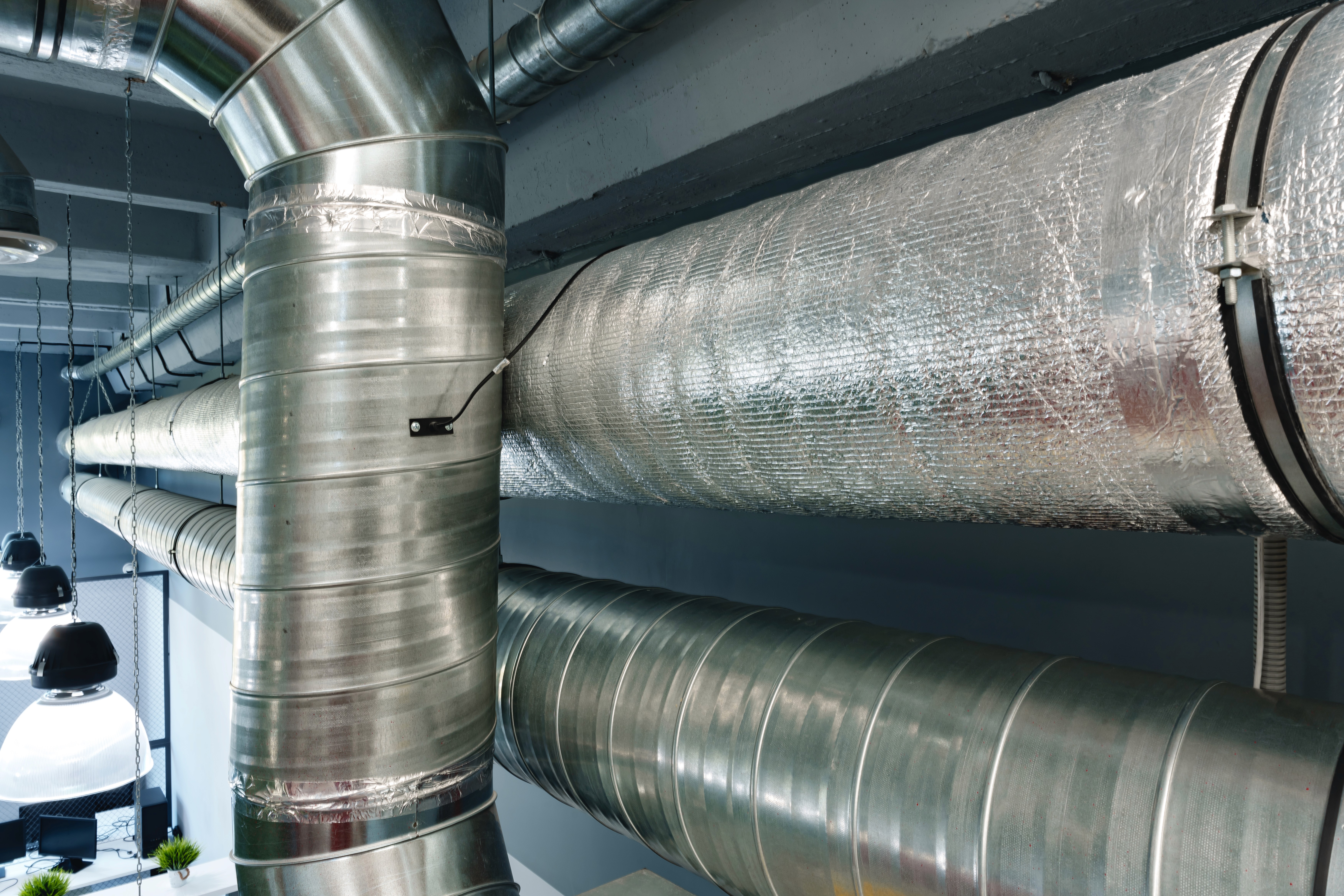
For contractors specifying HVAC duct insulation in commercial buildings, this resolves the most common field problem: getting a compliant installation in a space that was never designed with generous clearances.
ASTM E84 Class A — What the Fire Rating Means for Your Job
Both fiberglass and reflective bubble foil insulation products are available with ASTM E84 Class A fire ratings, but not all products carry it. When specifying insulation for commercial buildings in Canada and the United States, ASTM E84 Class A is the standard commercial contractors and mechanical engineers must verify before installation.
ASTM E84 Class A requires:
Flame Spread Index (FSI): ≤25
Smoke Developed Index (SDI): ≤450
These numbers matter on every commercial job. The International Mechanical Code (IMC) and the National Building Code of Canada both reference ASTM E84 compliance for insulation materials installed in occupied commercial buildings, plenum spaces, and mechanical rooms. An inspector looking at your installation will look at the label. A material that is not ASTM E84 Class A rated is not code-compliant in most commercial occupancies, regardless of how well it performs thermally.
For fire barrier insulation applications specifically — corridor ceilings, equipment room enclosures, and anywhere egress routes are involved, Class A is not optional. Specifying a material that lacks this rating creates liability for the contractor and the building owner.
All Insulapack reflective bubble foil products carry ASTM E84 Class A certification. When a contractor or mechanical engineer requests a compliance document, it is available.
Where Fiberglass Still Makes Sense
An honest comparison acknowledges where fiberglass performs well. In open commercial cavities — exterior wall assemblies, large roof deck applications, and above-ceiling spaces with ample clearance — fiberglass batts and boards remain a cost-effective, well-understood choice. Where thickness is not constrained, fiberglass delivers reliable thermal performance at a lower material cost.
For acoustic insulation applications in open wall cavities, fiberglass also provides meaningful sound attenuation that reflective foil does not match in the same thickness range.
The problem is not that fiberglass is a poor product. The problem is that it is routinely specified for jobs where the installation conditions make compliant performance impossible to achieve.
Where Reflective Bubble Foil Wins - Tight Spaces, Speed, and Safety
In commercial HVAC, the applications where reflective bubble foil consistently outperforms fiberglass are the ones contractors encounter on nearly every mechanical job:
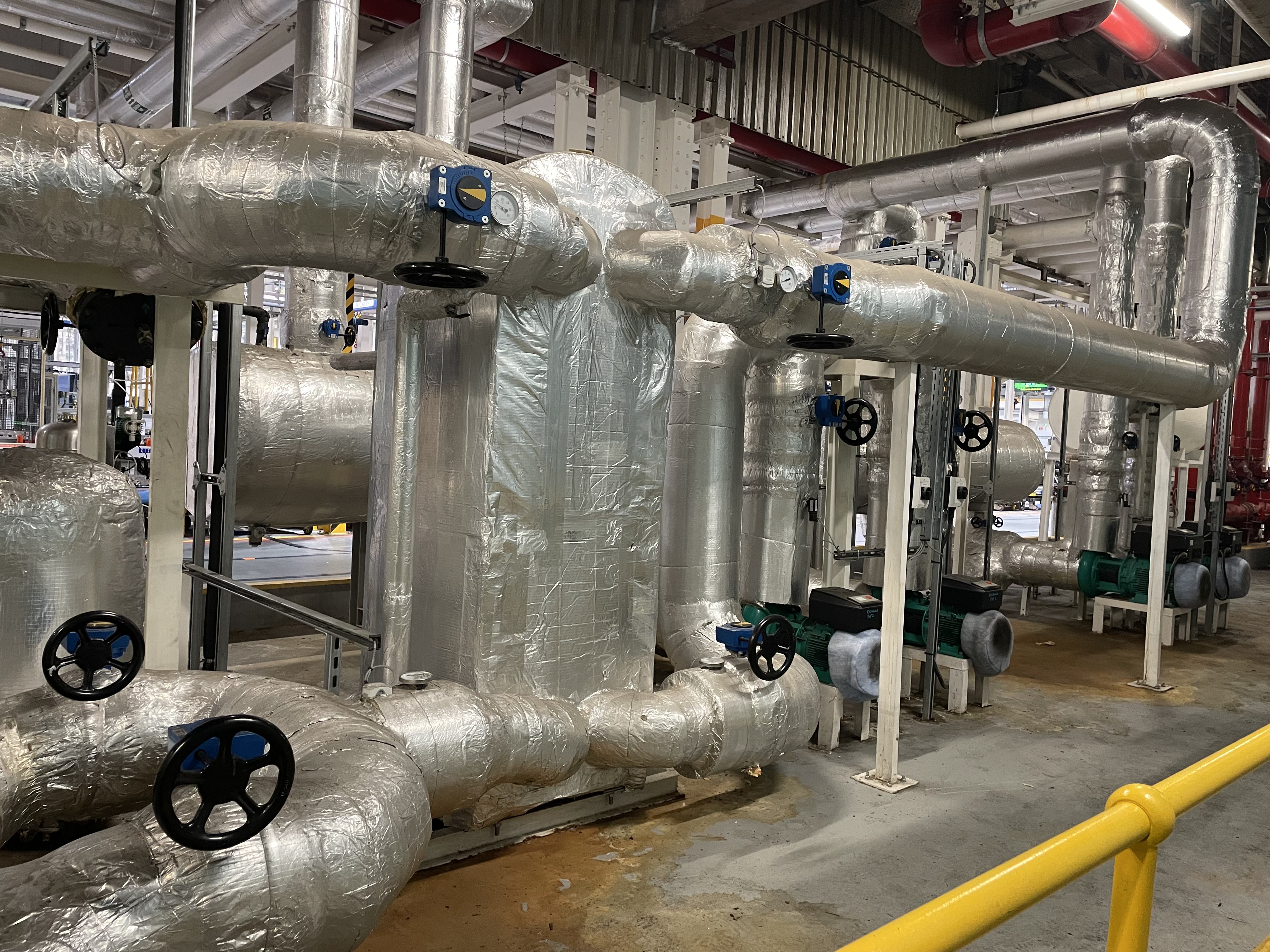
Tight mechanical rooms. Equipment rooms where ductwork and piping run within inches of walls and structural elements. No airspace required means compliant installation in spaces where fiberglass compresses and conventional reflective products cannot meet their airspace requirement.
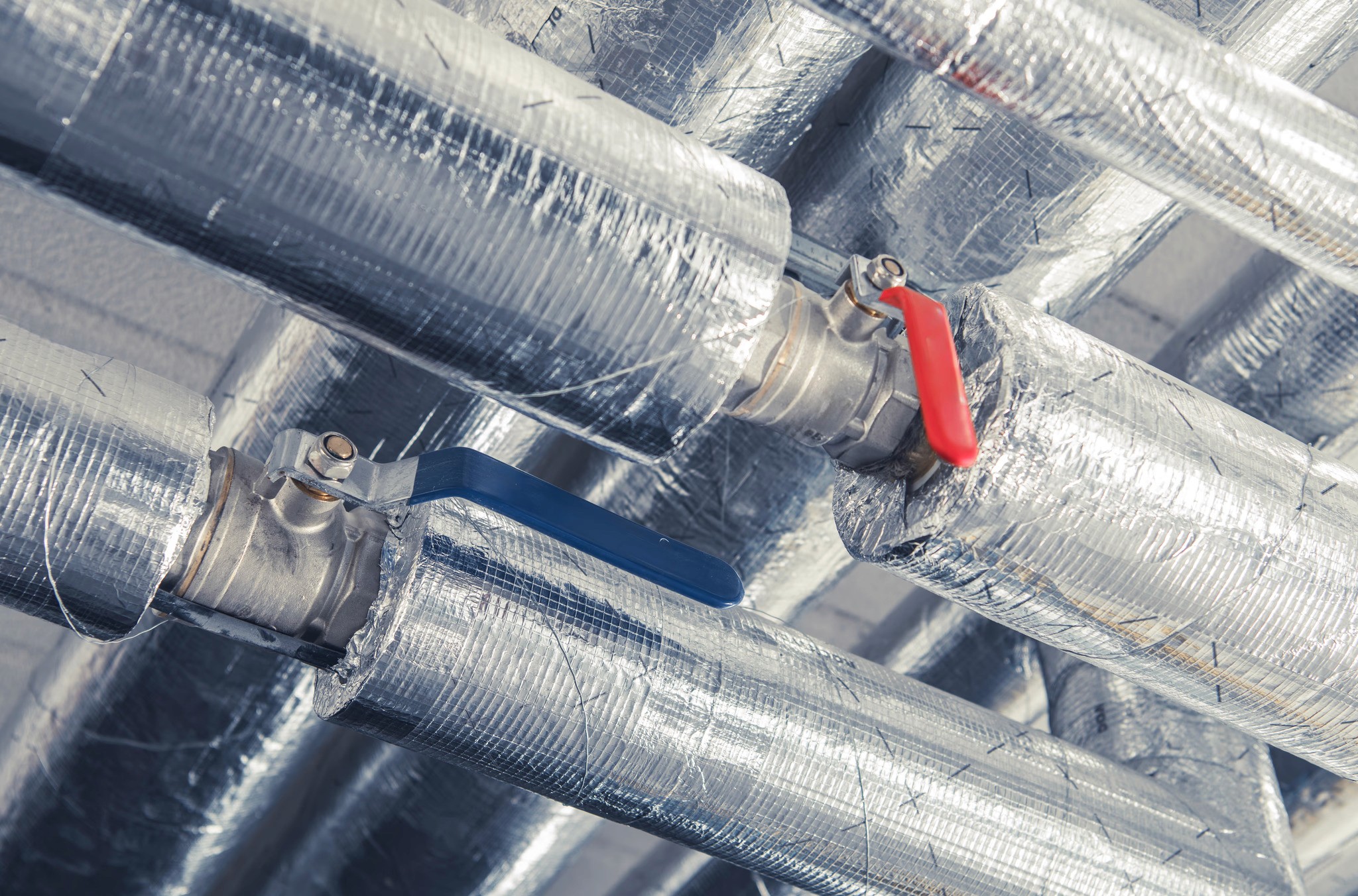
Pipe insulation wrap in confined chases. Round pipe geometry already makes achieving fiberglass coverage difficult. In a chase with less than an inch of clearance, reflective bubble foil wraps flush and performs as rated.
Roof and ceiling insulation under metal decking. Metal deck roofs with tight profiles benefit from the radiant heat reflection that bubble foil provides — reducing cooling loads without requiring significant added depth.
Wall cavity insulation in commercial assemblies. Particularly in exterior wall systems with vapour barrier requirements, the non-toxic, recyclable construction of reflective bubble foil is a practical advantage over fiberglass, which requires protective equipment during installation and can cause respiratory irritation.
Installation speed. Reflective bubble foil cuts, wraps, and tapes faster than fiberglass in tight commercial applications. On a job with 50 linear feet of pipe in a confined mechanical room, that speed difference is measurable in labour hours.
In confined mechanical rooms, reflective bubble foil installs correctly where fiberglass compresses and fails to meet rated performance.
Code Compliance in Canada and the United States
Commercial insulation specifications in Canada and the United States reference overlapping but distinct code frameworks. Contractors working across both markets need to confirm compliance with the applicable standard for each project.
In Canada, the National Building Code (NBC) and the National Energy Code for Buildings (NECB) set thermal performance requirements for commercial assemblies. The NECB references effective R-values across climate zones, a detail that matters when specifying insulation for projects in Ontario, Alberta, and British Columbia, which have adopted progressively stricter energy performance requirements.
In the United States, ASHRAE 90.1 establishes commercial insulation R-value minimums by climate zone, and the IMC governs fire rating requirements for mechanical insulation in commercial buildings. Both reference ASTM E84 compliance for material selection.
Insulapack's reflective bubble foil insulation is LEED compliant, manufactured with non-toxic and recyclable materials, and carries documentation for LEED credit submissions, relevant for commercial projects pursuing green building certification in both countries.
For contractors and mechanical engineers specifying commercial insulation applications across Canada and the United States, Insulapack's B2B supply model includes fast lead times and compliance documentation on request.
Which to Specify on Your Next Commercial Job
The decision is not complicated when the conditions are clear. If the space allows full fiberglass thickness without compression and airspace is not a constraint, fiberglass is a proven, cost-effective choice. If the job involves tight mechanical rooms, confined pipe chases, or any space where conventional products will be compressed or cannot meet airspace requirements, reflective bubble foil insulation is the only material that installs correctly and performs as rated.
Frequently Asked Questions
Is reflective bubble foil insulation better than fiberglass for commercial HVAC?
In tight mechanical rooms and confined pipe chases, reflective bubble foil insulation is the better choice because it requires no airspace to achieve its rated R-value. Fiberglass compresses in confined spaces, reducing its thermal performance. In open commercial cavities with adequate clearance, fiberglass remains a cost-effective option.
Does reflective insulation need an air gap to work?
Traditional reflective insulation products require 3/4" to 1" of clear airspace on at least one face to achieve rated performance. Insulapack's reflective bubble foil insulation is different — it creates its own thermal resistance through sealed internal air pockets, requiring no external airspace or spacer.
What R-value does Insulapack reflective bubble foil insulation provide?
Insulapack reflective bubble foil insulation provides R-10.6 per inch with no airspace required. This is significantly higher than standard reflective products, which typically achieve R-3 to R-5 only when installed with the required airspace.
Is reflective bubble foil insulation ASTM E84 Class A fire-rated?
Yes. All Insulapack reflective bubble foil products carry ASTM E84 Class A certification — Flame Spread ≤25 and Smoke Developed ≤450. This meets commercial building code requirements across Canada and the United States, including the International Mechanical Code (IMC) and the National Building Code of Canada.
Can I use reflective bubble foil insulation on commercial HVAC ductwork in Canada and the US?
Yes. Insulapack reflective bubble foil insulation is suitable for commercial HVAC duct insulation across Canada and the United States. It meets ASHRAE 90.1 thermal requirements and ASTM E84 fire rating requirements referenced by both the IMC and the National Building Code of Canada. It is also LEED-compliant, with documentation available upon request.
Insulapack has manufactured reflective bubble foil insulation systems for commercial and industrial applications across Canada and the United States since 1975. R-10.6 per inch. ASTM E84 Class A. No airspace required.
Our team responds within one business day.
Technical Specifications